








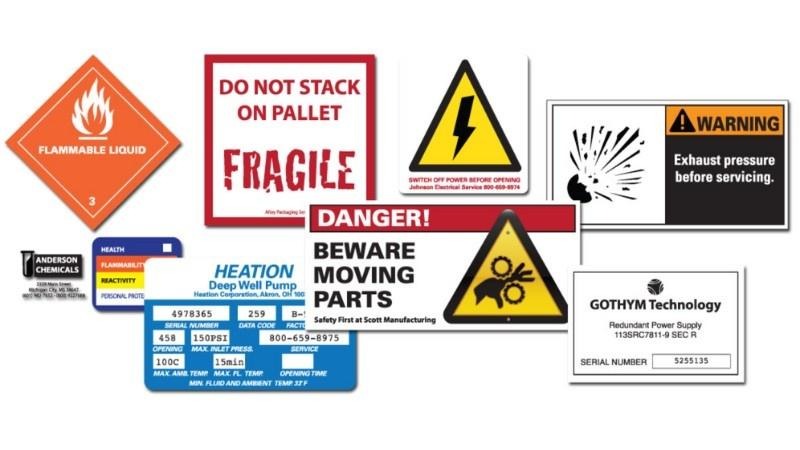
Warning decals help communicate workplace hazards, identify restricted areas, and remind employees of essential safety precautions. However, their effectiveness depends on more than the wording or design. Correct placement ensures that workers can see and understand the message before approaching machinery, handling materials, or performing maintenance. For Canadian industrial facilities, a practical labelling strategy should consider visibility, material suitability, equipment use, and applicable safety requirements.
Table of Contents
- Why Correct Warning Decals Placement Matters
- 1. Place Warning Decals Near Machinery Hazards
- 2. Identify Hazards at Work Area Entrances
- 3. Position Labels for Clear Visibility and Readability
- 4. Match Decal Materials to the Operating Environment
- 5. Separate Operating Warnings From Maintenance Information
- 6. Create a Consistent Facility Labelling Plan
- 7. Inspect and Replace Damaged Warning Decals
- Frequently Asked Questions
- Where should warning decals be placed on industrial equipment?
- What is the difference between warning decals and danger labels?
- Which materials are suitable for industrial warning decals?
- How often should safety labels be inspected?
- Can custom decals be used outdoors?
- What should businesses consider when ordering custom labels?
- Frequently Asked Questions
- Conclusion
Why Correct Warning Decals Placement Matters
Manufacturing plants, warehouses, workshops, and processing facilities contain different types of workplace hazards. Moving machinery, electrical systems, chemical storage areas, and high-temperature equipment may require specific warning information. Positioning warning decals near the relevant hazard helps workers recognize potential risks at the appropriate time.
For example, a warning about moving components should be visible before someone reaches into an operating machine. Likewise, electrical hazard markings should be noticeable before an employee accesses a panel. Nevertheless, labels are only one part of workplace safety. Equipment safeguards, training, maintenance procedures, and appropriate protective measures remain essential.
1. Place Warning Decals Near Machinery Hazards
Industrial machinery can present risks such as crushing, cutting, entanglement, and contact with moving components. Labels should be positioned where operators can see them before interacting with the relevant part of the equipment.
Moving Parts and Mechanical Equipment
Place warning decals near accessible pinch points, rotating components, cutting mechanisms, and other identified hazards. Consider the operator’s normal position and the direction from which the machine is approached.
For larger equipment, several labels may be necessary to maintain visibility at different access points. However, markings should not cover inspection windows, controls, or essential operating instructions.
Electrical Panels and Control Systems
Electrical cabinets and control panels may require markings that communicate electrical hazards, access restrictions, or specific operating precautions. Position the relevant information where personnel can see it before opening or interacting with the equipment.
Suitable control-panel overlays and custom decals can help keep operating information organized. Material selection should account for the surface, cleaning methods, temperature exposure, and expected wear.

2. Identify Hazards at Work Area Entrances
Entry points are useful locations for communicating risks before workers or visitors enter a particular area. They can also identify restricted access and reinforce site-specific precautions.
Restricted and High-Risk Areas
Place appropriate signs or warning labels near access doors, barriers, and entrances to areas containing recognized hazards. Keep the message visible from the normal approach and avoid obstructions caused by stored materials or open doors. For instance, a restricted-access notice should be visible before someone enters the area rather than appearing only beside the equipment inside it.
Chemical Storage and Handling Locations
Chemical storage rooms, dispensing stations, and designated handling areas may need hazard identification at entrances, containers, or equipment, depending on the application. In Canada, the Workplace Hazardous Materials Information System (WHMIS) establishes requirements for hazardous-product classification and labelling. Danger labels and other hazard communications must reflect the applicable hazard and labelling requirements. A general-purpose decal should not be treated as a substitute for a required supplier or workplace label.
3. Position Labels for Clear Visibility and Readability
A warning is less useful when it is difficult to see or read. Therefore, placement should account for viewing distance, lighting, worker movement, and possible obstructions.
Consider Viewing Angles and Working Positions
Install warning decals where employees can see them from the positions they normally use to operate, inspect, or service equipment. Avoid locations behind pipes, handles, access doors, or stored materials.
For large machines or equipment approached from several directions, assess whether additional markings would improve visibility. The goal is to present the relevant information before a person encounters the hazard.
Use Clear Text, Contrast, and Symbols
Text should be readable at the expected viewing distance, while sufficient contrast can help distinguish the warning from the equipment surface. Recognized symbols may communicate hazards quickly, especially when employees need to scan several labels during a work task. However, colour alone should not carry the entire message. Use clear wording and appropriate symbols, following applicable standards and site procedures.
4. Match Decal Materials to the Operating Environment
Industrial labels may be exposed to moisture, sunlight, oils, cleaning agents, abrasion, temperature changes, and repeated handling. These conditions influence both material selection and placement.
Choose Materials for the Surface and Exposure
When sourcing custom labels in Canada, consider the equipment surface, indoor or outdoor use, expected service conditions, and required durability. Vinyl decals suit various applications on compatible surfaces, while Lexan overlays may be appropriate for certain control panels and equipment interfaces. Neither material is ideal for every application. Confirm adhesive compatibility, temperature limits, chemical resistance, and other specifications before choosing a product.
Prepare the Application Surface
Even a suitable decal may not adhere properly to a dirty, wet, oily, or incompatible surface. Follow the manufacturer’s preparation and installation instructions, including any requirements for cleaning, drying, and curing. Where possible, avoid positions exposed to unnecessary abrasion or regular contact. If the hazard location cannot be changed, select materials and finishes suited to the conditions.
5. Separate Operating Warnings From Maintenance Information
Operators, inspectors, and maintenance personnel may need different information. A well-planned labelling system considers what people need to know at each stage of a task.
Everyday Operating Instructions
Position operating warnings where personnel can refer to them without leaving their normal working position or compromising safe operation. Keep messages concise and distinguish hazard information from routine instructions.
Inspection and Maintenance Access
Maintenance-related warnings should be visible before personnel access the relevant component. Where equipment isolation or lockout procedures apply, labels should reinforce established procedures rather than replace them.
Consult the employees who perform these tasks when reviewing placement. Their feedback may identify blind spots, obstructed views, or practical issues that are not apparent during the design stage.
6. Create a Consistent Facility Labelling Plan
A facility-wide labelling plan helps prevent missing warnings, inconsistent terminology, and confusion between similar machines. It also makes routine inspections and replacement work easier to organize.
Start by listing relevant equipment, identified hazards, access points, and existing labels. Check whether each message is accurate, readable, and positioned appropriately. Industrial Nameplates offers industrial identification products, including vinyl warning and safety labels, pipe markers, and Lexan control-panel overlays.
When evaluating custom decals, provide the intended application, surface type, operating conditions, required wording, and dimensions so the product can be assessed against the project’s needs. Maintain a record of label locations and inspection findings. Assign responsibility for identifying damaged markings and reviewing labels when equipment, processes, or workplace conditions change.
7. Inspect and Replace Damaged Warning Decals
Correct placement should be reviewed regularly because workplace conditions can change. Labels may become faded, scratched, detached, obscured, or outdated following equipment modifications. Include safety markings in routine workplace inspections. Check their visibility, legibility, attachment, and consistency with current procedures.
When replacing a label, confirm that its wording and placement remain appropriate. Reproducing an old design without reviewing its accuracy can preserve the same problem. Where the relevant hazard or process has changed, seek appropriate technical or safety guidance before installing a replacement.

Need Warning Decals for Your Industrial Application? Call 403-930-5543 to discuss your industrial labelling requirements and explore suitable decal and label options for your equipment, control panels, and workplace safety needs.
Frequently Asked Questions
Where should warning decals be placed on industrial equipment?
Position them near the relevant hazard where operators can see them before interacting with the equipment. Avoid locations that are obstructed, difficult to read, or exposed to unnecessary damage.
What is the difference between warning decals and danger labels?
Warning decals can communicate different hazards, precautions, or operating risks. The term danger labels generally refers to markings communicating a serious hazard; the correct signal word must reflect the applicable classification and requirements.
Which materials are suitable for industrial warning decals?
Vinyl and Lexan are options for different applications, depending on the surface and operating environment. Consider temperature, chemicals, moisture, abrasion, sunlight, and adhesive compatibility before selecting a material.
How often should safety labels be inspected?
Include them in routine workplace and equipment inspections, and review them after maintenance or process changes. Replace labels that are damaged, unreadable, missing, or no longer accurate.
Can custom decals be used outdoors?
Yes, certain custom decals and adhesives are suitable for outdoor applications when specified for the expected conditions. Check ultraviolet exposure, moisture, temperature changes, surface compatibility, and expected service life.
What should businesses consider when ordering custom labels?
Identify the intended use, hazard information, surface, dimensions, and environmental conditions. Also confirm that the proposed label meets any applicable Canadian and provincial or territorial requirements.
Conclusion
Correctly placed warning decals help employees recognize potential hazards when operating machinery, entering restricted areas, handling materials, or performing maintenance. By considering viewing angles, workplace conditions, material suitability, and the tasks performed around each piece of equipment, businesses can establish a more consistent approach to industrial identification. Regular inspections also help keep information accurate and readable as equipment and processes change. Ultimately, warning decals should support a broader workplace safety programme that includes appropriate safeguards, employee training, maintenance procedures, and compliance with applicable requirements.
Planning an industrial labelling project? Use Google Maps to locate the business and plan your visit. You can also browse the industrial decals and labels collection to review options for equipment identification, control panels, pipe marking, and workplace safety applications.